
Japanese Seaweed Guide: Nori, Wakame, and Kombu

Have you ever wanted to add more seaweed to your meals? In Japanese cooking, we use it in many everyday dishes. In this post, I’ll introduce three seaweeds, nori, wakame, and kombu, and share simple ways to enjoy them at home.
Grab my Japanese Grocery Shopping Guide with a simple shopping list!

3 Common Japanese Seaweeds
More than 50 kinds of seaweed are eaten in Japan, but nori, wakame, and kombu are three of the most useful for everyday home cooking. If you want to start adding seaweed to your meals, these are a great place to begin.
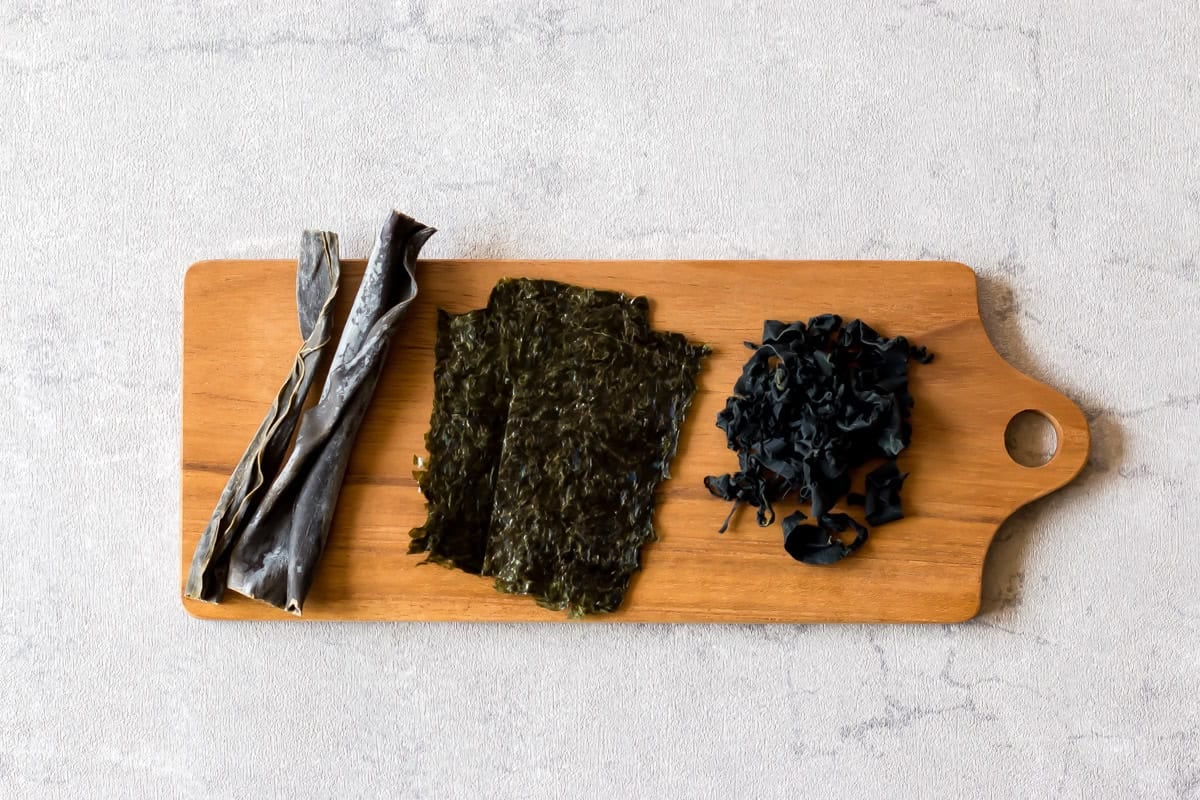
1. Nori
Nori is a thin, dried seaweed best known for sushi rolls and onigiri. It has a delicate sea flavor, a gentle roasted aroma, and a light, crisp texture.

How to Use Nori
Nori is used as-is, with no soaking needed. It stays light and crisp when eaten straight from the package, but when mixed with other ingredients, it absorbs moisture and softens into the dish.

- Wrap with it
Like with onigiri, nori is often used for wrapping. It helps hold rice together, makes food easier to eat, and adds flavor. - Sprinkle it on top
Nori also makes a wonderful topping. Shredded nori is perfect as a finishing touch for noodles, rice dishes, salads, and more. - Use It as an Ingredient
Nori can also become part of the dish itself. You can mix it into salads or roll it inside dishes like tamagoyaki.
Try these nori recipes:
2. Wakame
Wakame has a gentle ocean flavor and a tender texture. Many people may recognize it from miso soup or seaweed salad at Japanese restaurants.

How to Use Wakame
The most common form is dried wakame. Before using it, soak it in water for a few minutes. It expands to about 10 times its dried size, so you only need a small amount.

- Add It to Soups
Wakame is a classic ingredient in miso soup, and it also works well in light, clear soups. - Use It in Salads
Its tender texture pairs well with crisp vegetables like cucumber and lettuce. - Use It as an Easy Add-In
You can also add a small amount of wakame to simple noodle soups. It adds extra texture and a gentle seaweed flavor.
Try these wakame recipes:
3. Kombu
Kombu is a type of dried kelp widely used in Japanese cooking, especially to make dashi, a savory broth that forms the base of many soups and simmered dishes.

How to Use Kombu
I always keep two types of kombu on hand: dried kombu, which I usually soak before using, and shio kombu, a seasoned, salted kombu sold in thin, ready-to-use strips.

- Make Dashi with It
Dried kombu is most often used to make dashi, a gentle yet deeply savory broth that forms the base of many Japanese dishes. - Eat the Kombu Itself
After making dashi, the softened kombu can be simmered or sautéed into flavorful side dishes with a pleasantly chewy texture. - Season with Shio Kombu
Shio kombu is an easy way to add flavor quickly. Mix it into rice, toss it with vegetables, or use it to season a simple stir-fry.
Try these kombu recipes:
More Japanese Seaweeds to Explore
There are many other seaweeds enjoyed in Japan, and here are a few more you may come across:
Watch This Video

Not Sure What to Buy First?
Japanese Grocery Shopping Guide

More Ingredient Guides You Will Love
Leave a Comment!
I hope you enjoyed this post! Share your thoughts in the comments below!




Juri Austin
Hi! I’m Juri, founder of Chef JA Cooks and the creator and photographer of this site. I’m here to guide you in authentic yet easy-to-follow Japanese recipes! Let’s explore the world of Japanese cuisine together!