
How To Make Natto using Store-bought Natto as a Starter

Learn How To Make Natto at home with just soybeans and store-bought natto as a starter. This simple guide covers the steps to create fresh, delicious, and probiotic-rich natto in your kitchen!
Looking for natto recipes? Try my Natto Rice, Natto Sushi Rolls, or Natto Cheese Toast!

Featured Comment
From A.C.: “Very helpful overview of natto, and for DIY/ homemade.”
Why You Will Love This Recipe
Recipe Ingredients
You’ll need the following ingredients to make this Homemade Natto Recipe:

Equipment
Here are some useful tools for making natto:
How To Make Natto: STEP BY STEP
Here’s a quick visual guide! Check the recipe card below for the video and full details!

Step 1
Soak the soybeans.

Step 2
Drain the soaked soybeans and transfer them to a pressure cooker.

Step 3
Cook the soybeans in a pressure cooker.

Step 4
Mix in store-bought natto while the soybeans are still warm.

Step 5
Cover the container with a paper towel.

Step 6
Ferment the soybeans for 24 hours at 45°C (113°F).

Check if the soybeans have developed a sticky texture—if they have, your homemade natto is ready! Transfer it to an airtight container and store it in the refrigerator.
Dive Deeper into Natto!
To learn more about natto, you can explore these articles:

Grab My Natto eBook!
Find tasty, practical ways to enjoy natto in your everyday meals!

40+ simple recipes for Japanese Food Lovers!
From Japan with Flavor: NATTO

More Natto Recipes You Will Love
Leave a Rating!
I hope you enjoy this recipe! Don’t forget to rate it and share your thoughts!
How To Make Natto using Store-bought Natto as a Starter
Equipment
Ingredients
Instructions
- Soak the Soybeans: Place the soybeans in a large bowl. Cover them with plenty of water and let them soak for 8 hours or more. They should double in size.
- Cook the Soybeans: Drain the soaked soybeans and transfer them to a pressure cooker. Cover with fresh water, close the lid, and cook over medium heat. Once the pressure cooker reaches full pressure, turn off the heat. After all the pressure is released, open the lid and drain the cooked soybeans.
- Mix with Natto: Transfer the soybeans to a sterilized container while they are still hot. Mix them thoroughly with the store-bought natto.
- Ferment: Cover the container with a paper towel (instead of a tight lid) and place it in the yogurt maker. Set the temperature to 45°C (113°F) and let the soybeans ferment for 24 hours. Keep the yogurt maker lid partially open to allow proper airflow.
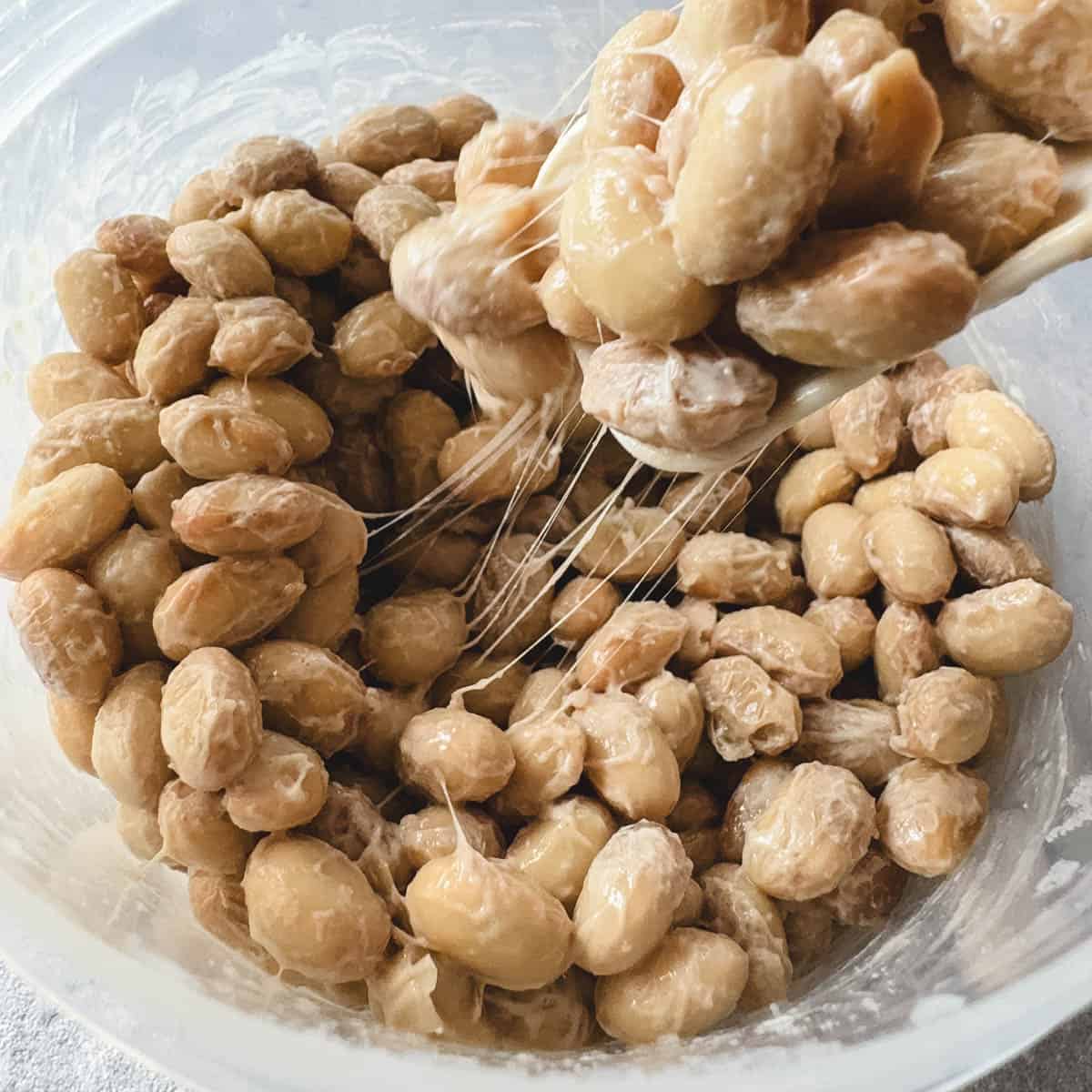
- Store: After 24 hours, check to see if the soybeans have developed a sticky texture. If they have, transfer the natto to an airtight container and store it in the refrigerator.
Notes
- Storage: Store homemade natto in the refrigerator and consume it within a week. For longer storage, freeze it for up to a month.
- Be sure to sterilize all tools before use.
- Natto needs air to ferment, so instead of sealing the fermentation container with a lid, cover it with a paper towel or cloth.
- Let the natto ripen in the refrigerator overnight after fermentation to enhance the flavor.
Nutrition
This nutritional information is estimated and provided for general reference only.
Did You Make This Recipe?
Please leave a review!!


very helpful overview of natto, and for DIY/ homemade.
-I’m curious about:
-how long does one batch last in the fridge?
-should it be eaten in small portions, daily, or at least a couple times per week?
– I was taking nattokinase supplements for heart-health effects; is there a ‘therapeutic’ dose/serving to get the 2,000 to 4,000 fu units equivalent, in fresh natto?
-how to know if it’s just ripe, or gone bad?
thank you!
Thank you for your question! Here are the answers for you:
-Homemade natto lasts about one week in the fridge, and you can also freeze it for up to a month.
-A common guideline for how often to eat it is one small pack per day (about 40–50g).
-As for the nattokinase amount, I’m not sure about the exact values, so it’s best to check with a healthcare professional.
-To tell if natto has gone bad, look for a strong ammonia-like smell, no stickiness, or beans that appear dried out.
Here in the U.S. I can only buy frozen natto shipped from Japan. Can frozen natto be used as a starter to make more natto after it is thawed? Or does the freezing process kill the bacteria needed for fermenting new natto?
You can also use frozen natto! The natto bacteria is resistant to cold and won’t die when frozen. It simply becomes dormant but reactivates once thawed!
Thank you!