
Types of Soba Noodles

Confused about which soba noodles to choose? This straightforward guide breaks down each type so you can find the perfect soba for your next soup or cold dish. Let’s dive in!

What Are Soba Noodles?
Soba noodles are traditional Japanese noodles made from buckwheat flour, or a mix of buckwheat and wheat flour. They’re thin, light, and usually darker than udon noodles.
Buckwheat isn’t a type of wheat; it’s actually a gluten-free seed. The outer skin of the buckwheat kernel is removed, then ground into a fine flour, often using a stone mill. This flour gives soba its signature taste and darker color, and it’s also packed with nutrients.
Types of Soba by Buckwheat Ratios
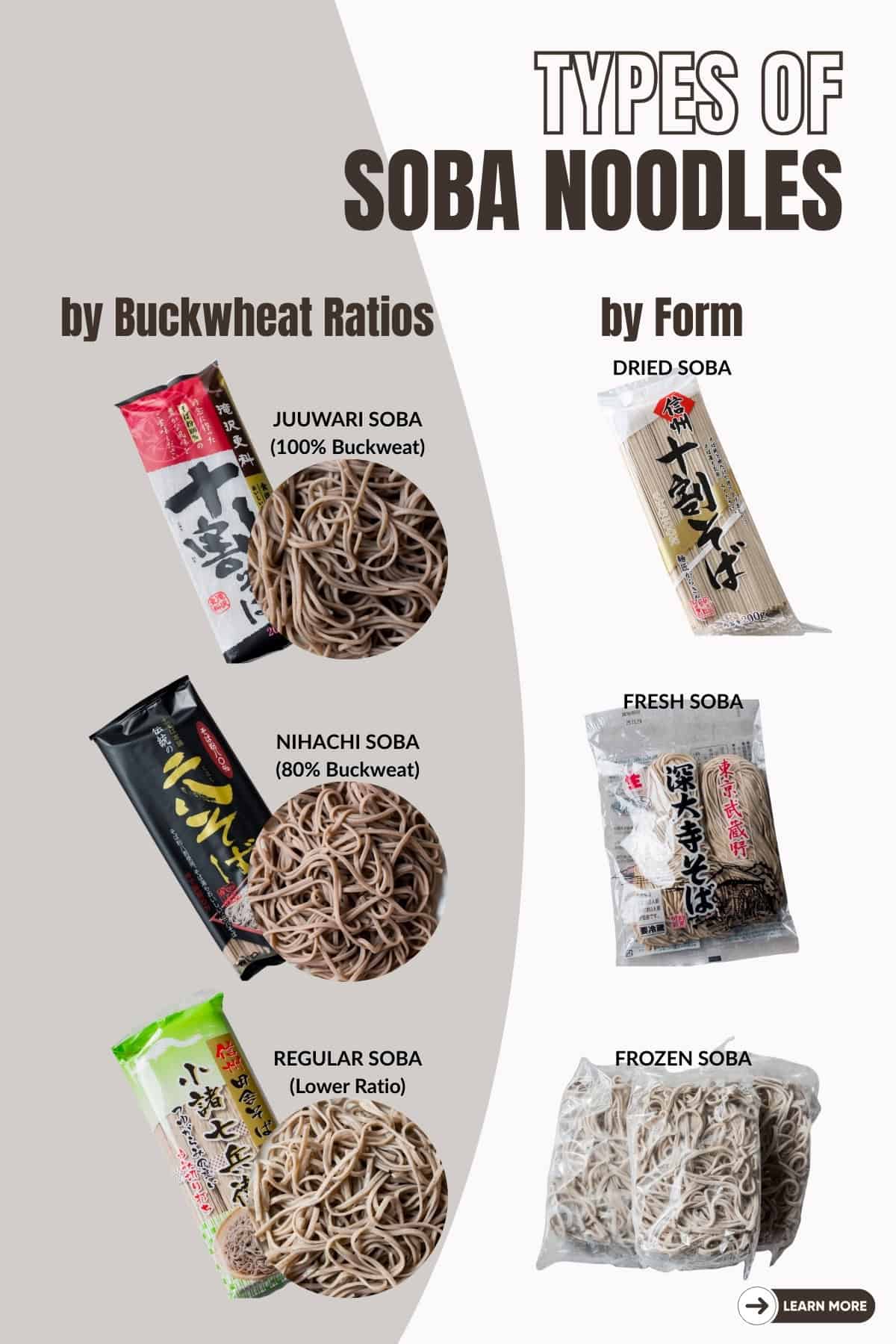
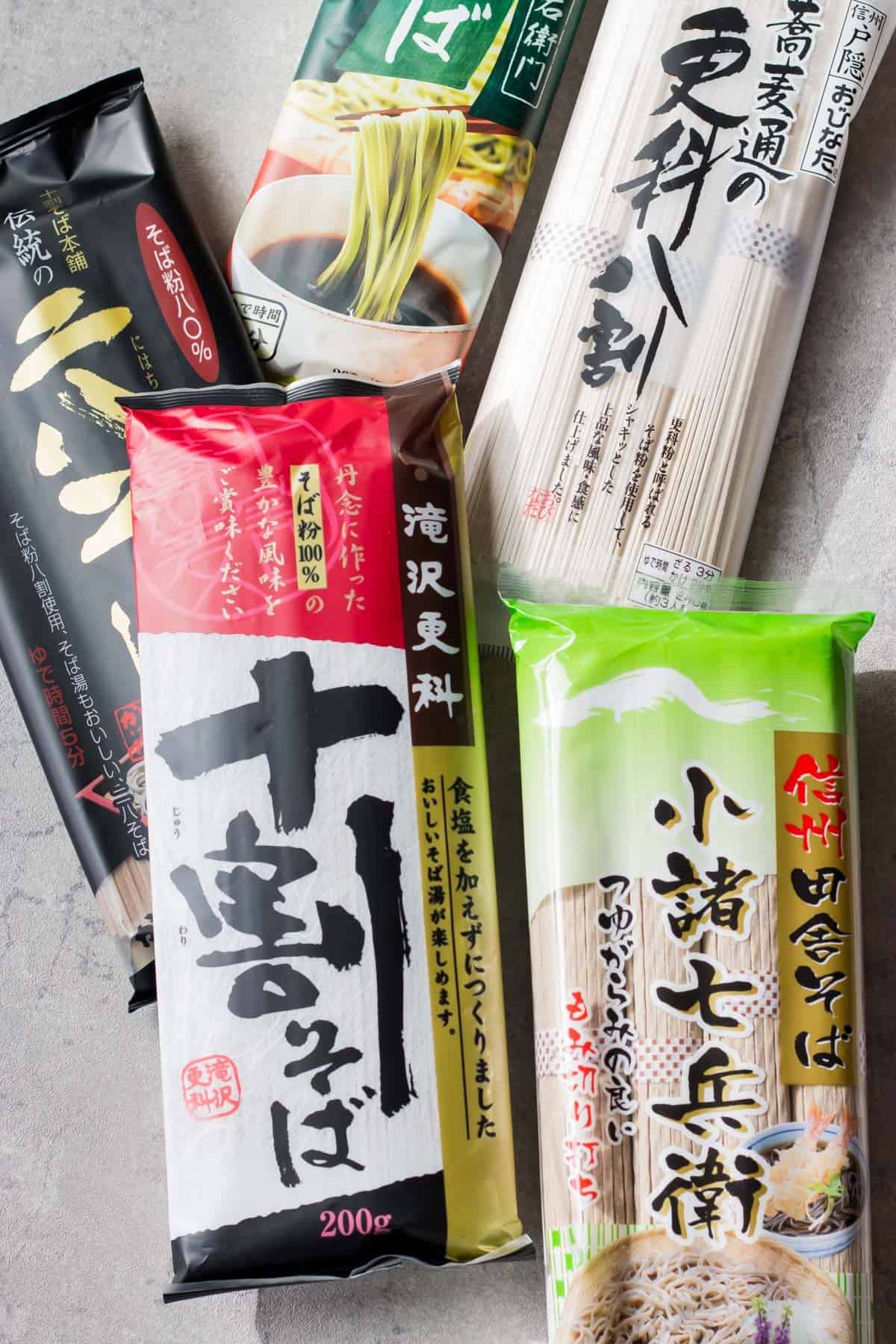
The flavor, aroma, and texture all depend on how much buckwheat is used. In most grocery stores, you’ll find three common types of soba based on their buckwheat ratio. Let’s take a closer look!
Juuwari Soba (十割そば)
Juuwari soba is made from 100% buckwheat flour. With no wheat to bind the dough, the noodles are more delicate and can break easily.

Nihachi Soba (二八そば)
Nihachi soba is made from 80% buckwheat flour and 20% wheat flour. The addition of wheat gives the noodles a smooth, slightly chewy texture. This is the type commonly served at many soba restaurants in Japan.

Regular Soba
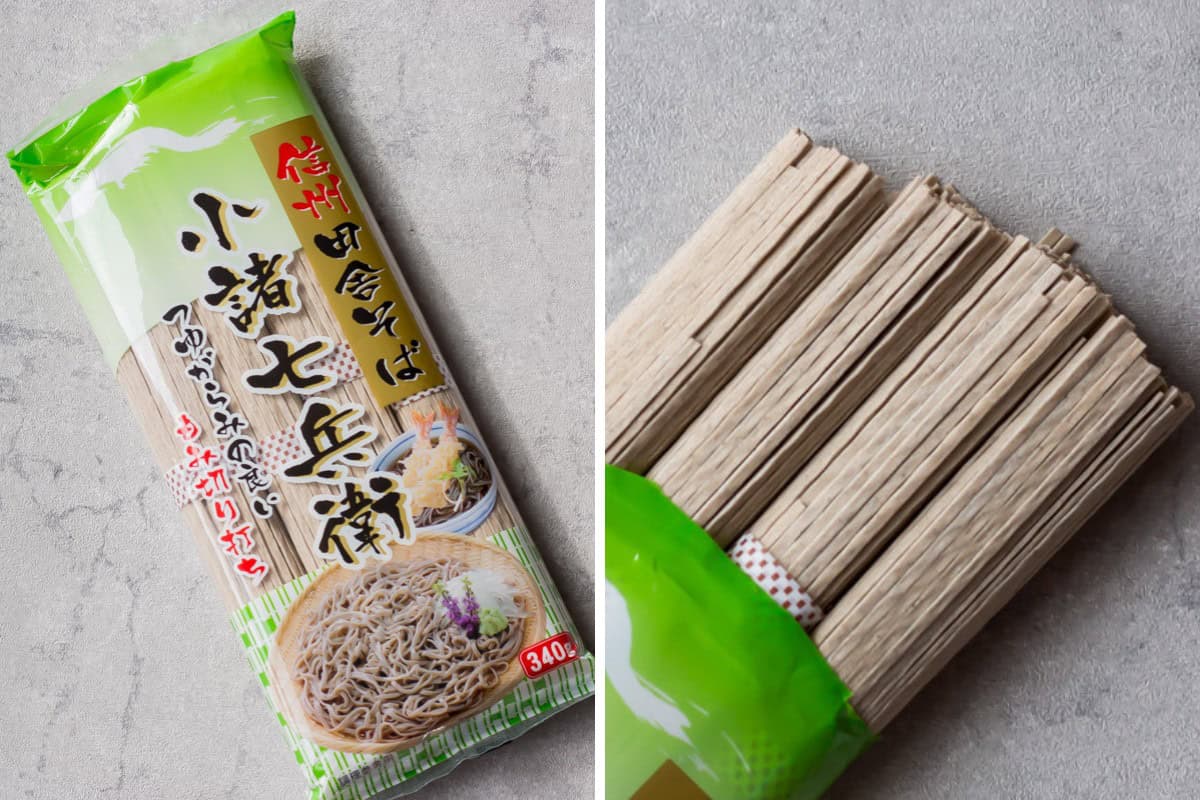
Regular soba contains less buckwheat than the two types above, and the exact percentage varies by brand. The flavor is milder, and the noodles are sturdy enough to hold up well in hot soups or cold noodle dishes.
Comparison Table
|
Type |
Backwheat Ratio |
Flavor |
Texture |
|---|---|---|---|
|
Juuwari Soba |
100% buckwheat |
Earthy, aromatic |
Delicate |
|
Nihachi Soba |
80% buckwheat + 20% wheat |
Balanced buckwheat aroma |
Slightly chewy |
|
Regular Soba |
Lower than the other two |
Mild, less nutty |
Sturdy |
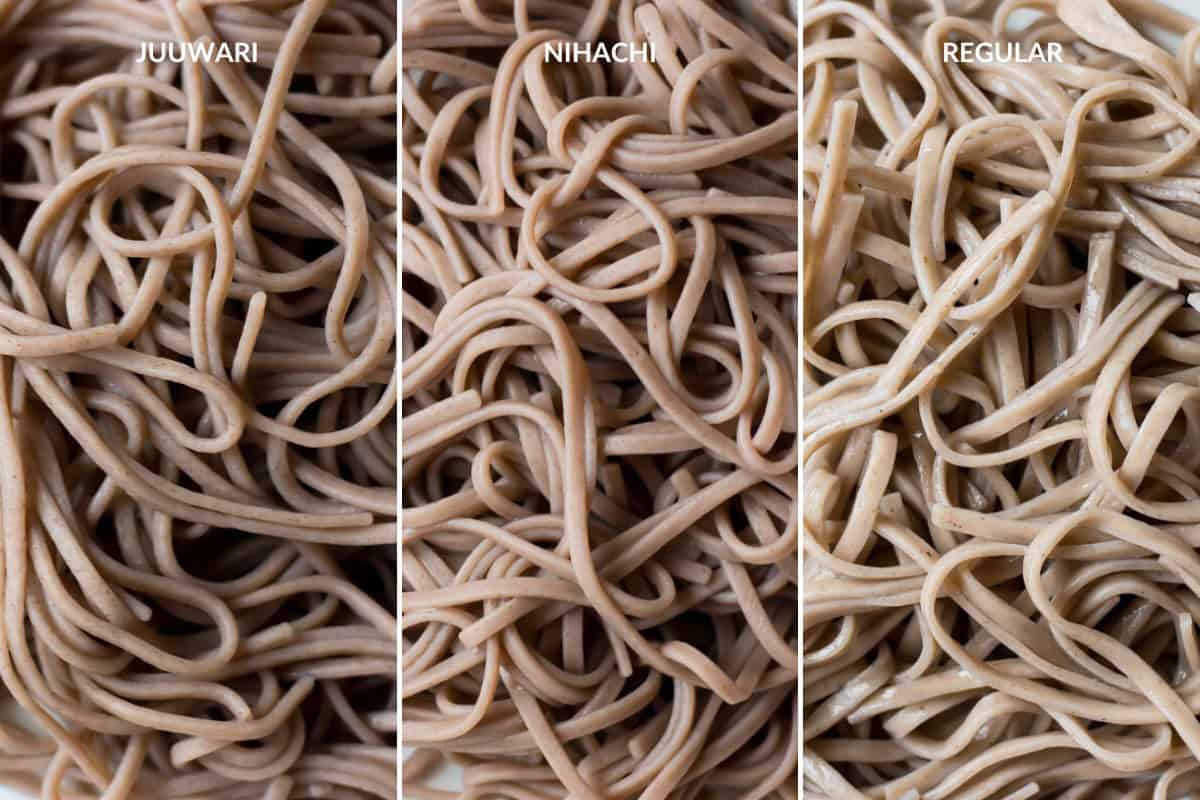
Here are the noodles after boiling. Juuwari soba is darker, while regular soba is lighter because it contains more wheat flour.
Types of Soba by Form
Soba also comes in different forms: dried, fresh, and frozen. Here’s a quick look at each one.
Dried Soba
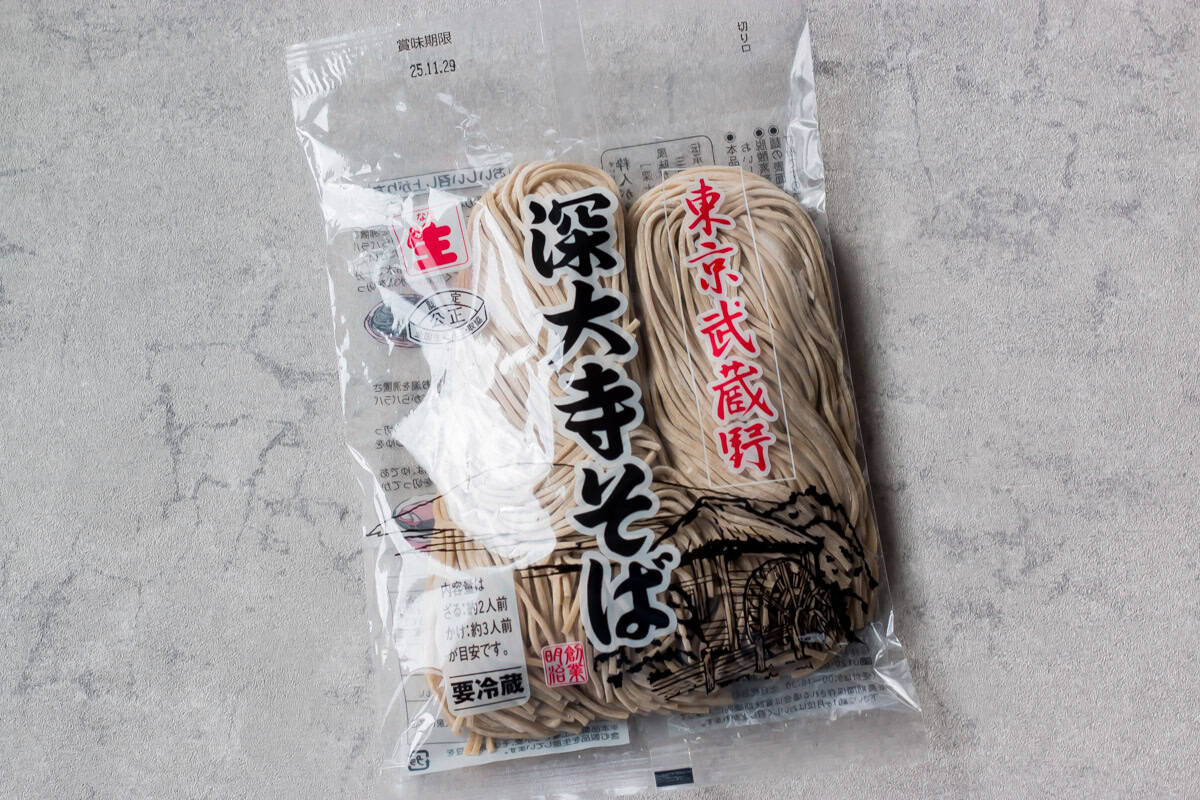
Dried soba is the most common type you’ll find in supermarkets. It has a long shelf life and is easy to keep on hand.
Fresh (Nama) Soba
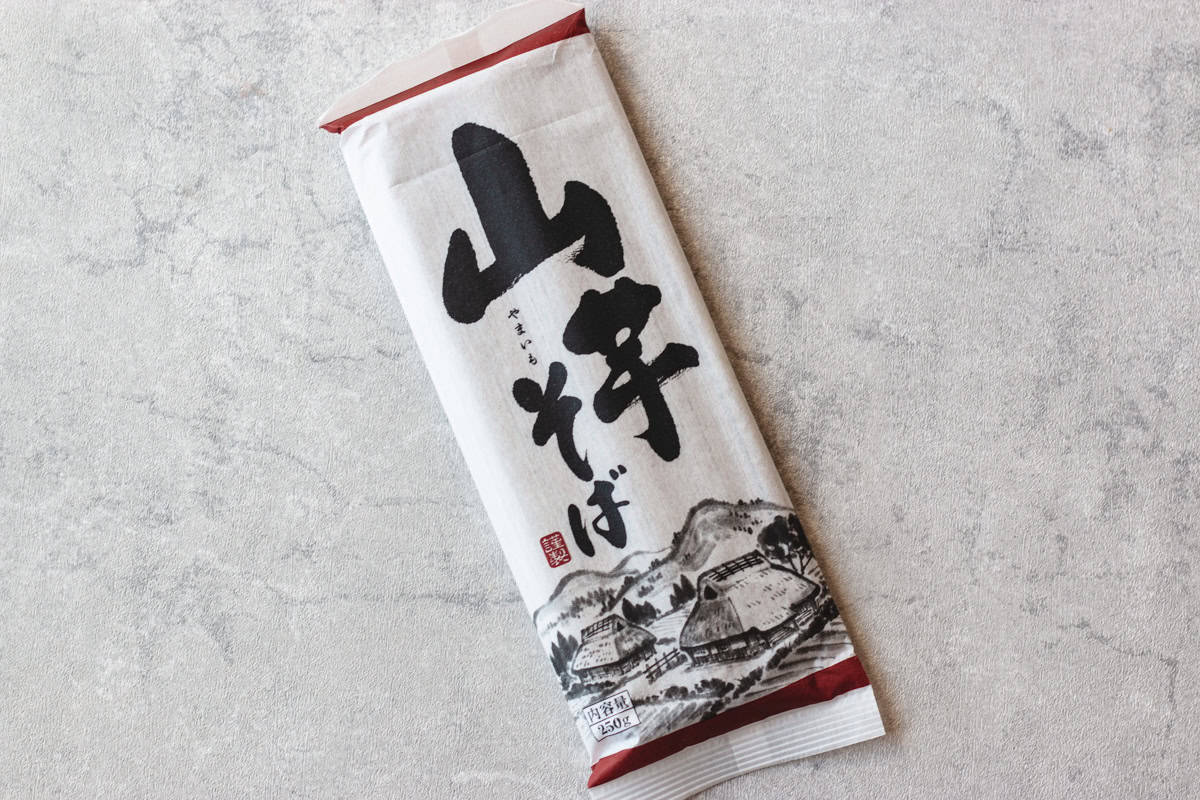
Fresh soba has a softer texture and a richer buckwheat aroma.
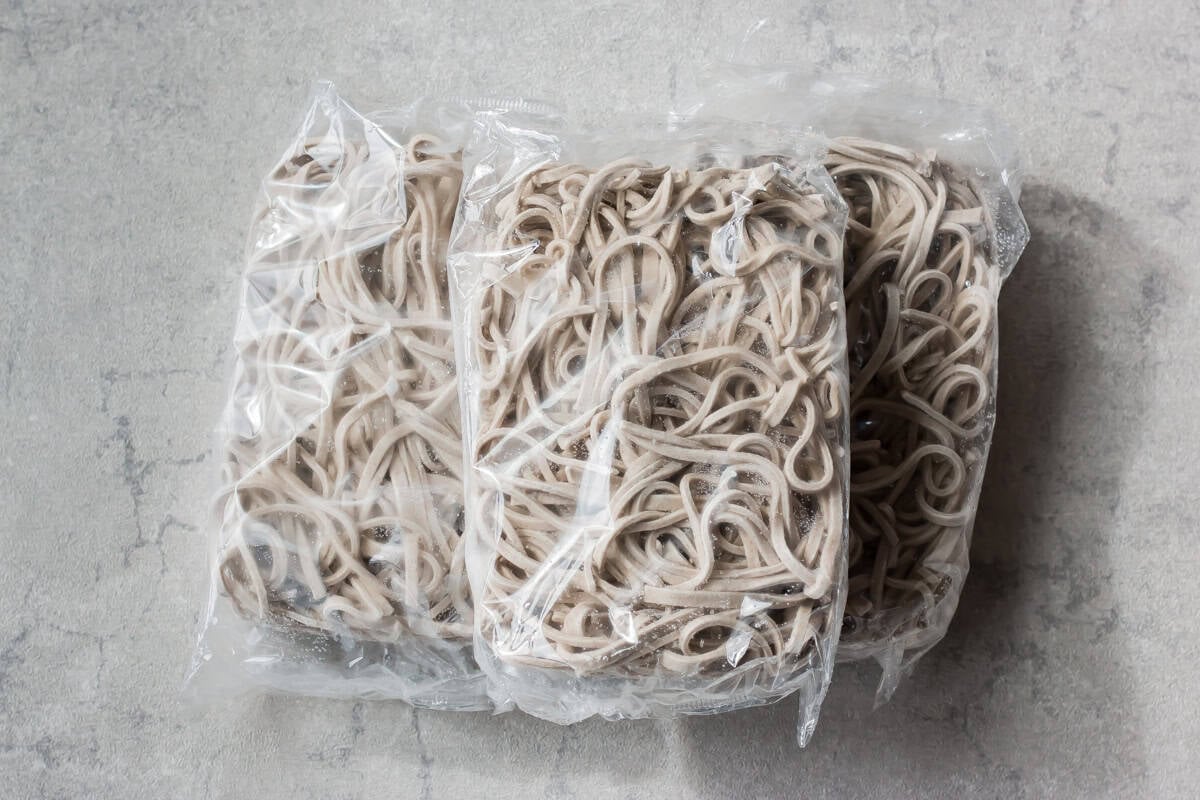
Frozen Soba
Frozen soba is very convenient. It cooks much faster than dried noodles, making it easy to prepare anytime.
Comparison Table
|
Type |
Cooking Time |
Storage Method |
Shelf Life |
|---|---|---|---|
|
Dried Noodles |
5-6 minutes |
Cool, dark place |
About 1 year |
|
Fresh Noodles |
1–2 minutes |
Refrigerator |
2 to 3 days |
|
Frozen Noodles |
1–2 minutes |
Freezer |
1 month |
Which One Should You Choose?
Here’s a quick, simple guide:
Try These Soba Noodle Dishes!
Once you’ve picked your soba noodles, try one of these classic, simple Japanese dishes:
Your Questions Answered
Only juuwari soba is naturally gluten-free, but always check the label to make sure it’s made with 100% buckwheat flour.
Start with dried regular soba. It’s easy to cook and has a long shelf life.
Soba with less buckwheat (more wheat) is typically cheaper. Juuwari and ni-hachi soba cost more because of their higher buckwheat content.
The higher the buckwheat ratio, the darker the noodles. Juuwari is the darkest, while regular soba is much lighter.
Soba with a higher buckwheat ratio (like juuwari) is more fragile. Be gentle when stirring and rinse with cold water right after boiling.
If you have more questions, feel free to leave a comment below!
Hard-to-Find Japanese Ingredients?
Here’s What to Use Instead!
More Ingredient Guides You Will Love
Leave a Comment!
I hope you enjoyed this post! Share your thoughts in the comments below!





Juri Austin
Hi! I’m Juri, founder of Chef JA Cooks and the creator and photographer of this site. I’m here to guide you in authentic yet easy-to-follow Japanese recipes! Let’s explore the world of Japanese cuisine together!